
-
36-hr ICR bandh marred by sporadic violence, Sub inspector…
-
Governor condoles demise of Bengia Tolum
-
Arunachal Pradesh to undertake Special Intensive Revision of …
-
Large acreage of wild cannabis destroyed in joint…
-
New community hub 'Ekta Bhawan' opens at Yazali Police…
-
Dr. Joram Aniya calls on Governor
-
Indian Army inaugurates transit facility at Sigar Military Station
-
 Khandu inaugurates Arunachal Niwas, fourth facility in New Delhi
-
ACS announces sit-in protest, demands CM’s resignation on moral grounds
-
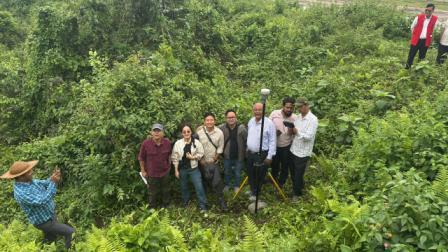 Assam-Arunachal border delineation exercise concludes in Lower Siang
4 Dogra defend the honour of Nefa, now Arunachal Pradesh
On the 60th anniversary of the Battle of Walong, Brigadier Kuldip Singh Brar and Gen NC Vij, of the "4 DOGRA" who fought the battle in 1962, jointly takes us down the pages of history
By Brig Kuldip Singh and Gen NC Vij
We have been in the midst of a serious face off with China along our Northern borders in Eastern Ladakh since May 2020. In the Galwan Valley clashon 15/16 June 20, our brave soldiers fought fearlessly and tenaciously to teach the Chinese a befitting lesson. Unlike 1962, when the nation was unprepared for war, this time, the Indian Armed forces were far better prepared with battle-hardened soldiers, motivated officers and a determined national leadership. This has made all the difference.
In 1962, unfortunately, all these factors weighed heavily against us. Despite all the shortcomings, however, there were areas where we fought valiantly and reversed the Chinese onslaught incurring heavy casualties on them. Rezangla (Chushul Sector) in Eastern Ladakh and Walong in Lohit Valley, now Arunachal Pradesh are two such areas.
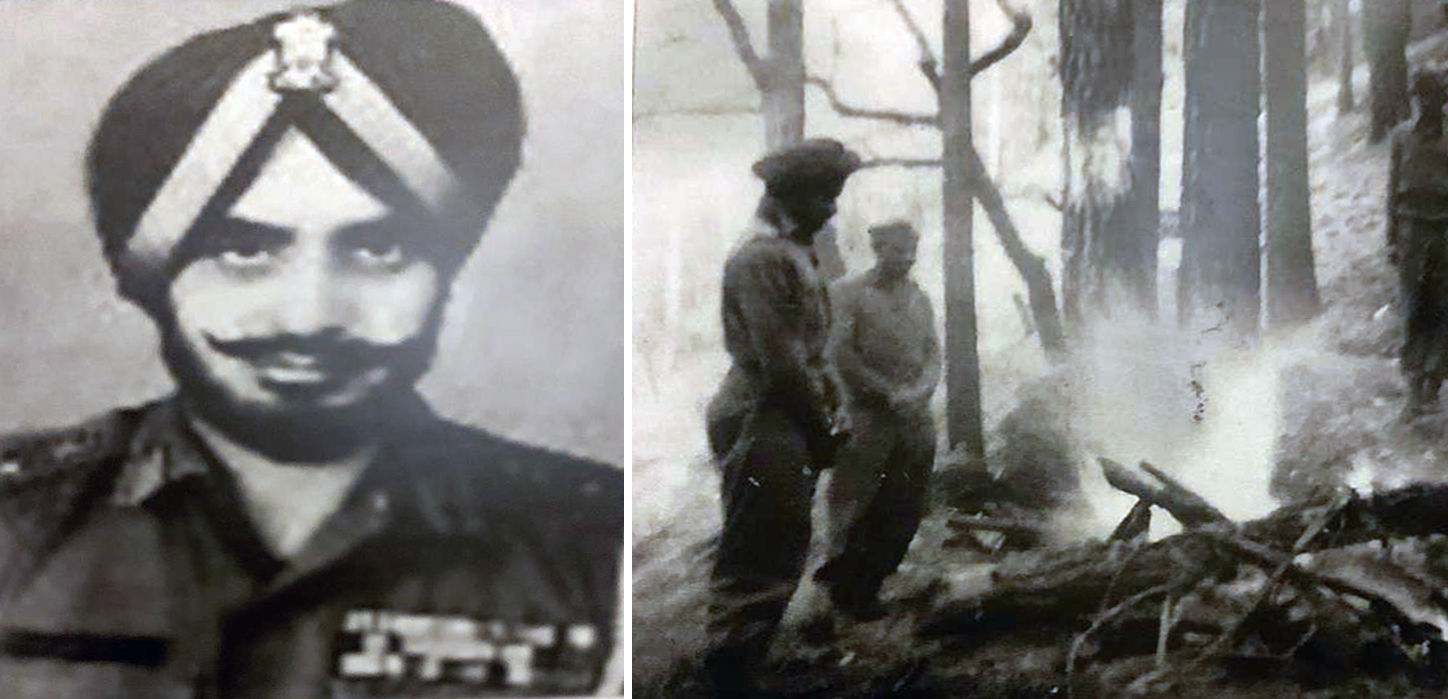
This story is about Walong Sector where our battalion, 4 DOGRAas a part of 11 Mountain Brigade fought atenacious battle against the Chinese to halt the marauding offensive in the Walong Sector and restore the territorial honour of NEFA, now Arunachal Pradesh. Lieutenant (later Brigadier) Kuldip, the co-author was then a young lieutenant who fought gallantly in the battle, and Major (later General and COAS) NC Vij joined the battalion a few days later in the wake of the Chinese war, straight from the Indian Military Academy, Dehradun.
11 Mountain Brigade though hurriedly assembled to defend Walong with 4 SIKH, 6 KUMAON and 3/3 Gorkha Rifleshad been engaged in fierce fighting with the Chinese since 20 October 62. By early November, the enemy had begun to induct a fresh Division for their final offensive. 11 Brigade Commander Brig Naween Rawlley ordered 6 KUMAON to dislodge the Chinese from Yellow Pimple (12750 ft).
On 14 November 62, a brave attempt by 6 KUMAON to capture Yellow Pimple against heavy odds could not succeed and Tri Junction (13250 ft) was in danger of falling to the Chinese. As 4 DOGRA flew into Walong by platoons and companies, Brigadier Rawlley ordered CO 4 DOGRA, commanded by Lt Colonel RS Pathania to relieve 6 KUMAON before the Chinese overran Tri Junction.
Lt Colonel Pathania was a battle-hardened officer. Anticipating total lack of artillery support, Tri Junction being out of artillery support range, he ordered the men to carry four timesthe normal scale of ammunition for rifles, light machine guns (LMG), 2-inch mortars and hand grenades.This meant that the DOGRAS at Tri Junction would fight with infantry platoon weapons only, whereas the Chinese had the support of their Divisional artillery. The DOGRAS braced themselves to fight the toughest battle of their history.
The thought uppermost in our minds was to defend the honour and sacred soil of NEFA, now Arunachal Pradesh irrespective of the sacrifices demanded from our soldiers.
Major KJS Grewal, commanding Delta company and Col Pathania’s group including Lieutenant Kuldip Singh the battalion Intelligence Officer, commenced their march to Tri Junction on the night of 14th November 62.
About one kilometer short of Tri Junction, the Dogra column, being navigated by Lieutenant Kuldip Singh ran into a strong Chinese block and intense small arms fire. Undeterred and displaying conspicuous courage of exceptional order, Grewal ordered a charge through the strongly held enemy position. Kuldip Singh and two section commanders wielding LMGs along with Grewal and his soldiers charged uphill, blasting their way through the Chinese block.
The hills echoed with the Dogras’ war cries, “Jwala Mata Ki Jai” and “Durga Mata Ki Jai”, The Chinese were stunned with the ferocity of the offensive and gave way. Kuldip, Grewal and his leading platoons surged through the opening and reached Tri Junction where Grewal took over the trenches from CO 6 KUMAON than under command of Lt Colonel Madiah. These were open, shallow trenches with no overhead cover, minefieldsor wire obstacles. The enemy was barely 40yards from the crest. With such unprepared defences, the defenders had hardly any chance to retain control over the area for long against a likely determined attack by the enemy.
Grewal launched a series of assaults to push back the Chinese. In vicious hand to hand fighting with bayonets, grenades, and machetes, the Dogras wrested back the forward trenches. This came at a considerable cost as 20 brave Dogras made the supreme sacrifice. Grewal, Kuldip and Subedar Ram Lal were wounded.
At 0730 hours on 16 Nov, the Chinese launched yet another massive attack under heavy artillery barrage. After one hour of fierce close quarter combat, the attack was repulsed.This, however,came at considerable cost as Grewal’s company suffered more casualties. Only 3 LMGs remained actively firing, 2-inch mortar bombs and hand grenades were exhausted; there were no sign of reinforcements.By now over 50% of the Dogras had made the supreme sacrifice, and most of the remainder were wounded.
At 0830 hours, Col Madiah ordered pull out from Tri Junction to Lohit River- Yapak Nala Junction, the designated check point for the Brigade’s withdrawal. At Grewal’s suggestion, Col Madiah with about 25 survivors of 6 KUMAON left Tri Junction at 0900 hours. Kuldip was ordered to leave with 5 walking wounded soldiers at 0930 hours.
The courageous Major Grewal with two LMG teams kept the Chinese at bay for a number of hours. Soon, another wave of the Chinese swarmed over Tri Junctionand overwhelmed Grewal and LMG teams.
Thus, ended at Tri Junction, the most heroic and bloodiest battle of the Eastern Sector in Walong.
Meanwhile, at Firm Base-Yapak Ridge, Subedar Rattan Chand and his platoon of 4 DOGRA held the defences. The Battalion’s doctor Lieutenant GS Subba had established the Regimental Aid Post there for treatment of the wounded. This position straddled the Chinese axis of advance to Lohit-Yapak nala Junction (LYJ) where the enemy had intended to establish a block to trap the withdrawing units of 11 Brigade.
The enemy launched their final offensive on night 15/16 November. By 1130 hours of the 16th, most positions in the Brigade had fallen. Though ordered to abandon position, Rattan Chand and Doctor Subba declined to withdraw in order to protect their Commanding Officer who was still ahead of the Firm Base.
Three Chinese attacks were repulsed by Subedar Rattan Chand and his brave men. By 1800 hours, the enemy encircled Firm Base and after a gruesome series of close quarter combat, the position fell but not before Subedar Rattan Chand and all his soldiers made the supreme sacrifice. The courageous doctor Lieutenant Subbadied treating the wounded in themedical bunker. Firm Base was the last position to fall of 11 Mountain Brigade on the night of 16/17 November.
Thanks to the extremely gallantaction of Subedar Rattan Chand and his valiant soldiers, the Chinese failed to establish a block at Lohit-Yapak Junction by the 16th evening. Consequently, nearly 1800 all ranks of 11 Mountain Brigade pulled out to safety.
In March 1963, Lieutenant Kuldip Singh led a team to Walong to recover and cremate our fallen comrades. At Firm base, they were stunnedto find the bodies of Lieutenant Subba, Subedar Rattan Chand and 28 martyrs of 4 DOGRA still in and around the bunkers, amidst heaps of cartridge cases which told of the ferocity of the fight put up by them.
In just 36 hours of intense fighting at Tri Junction and at Firm Base, 4 DOGRAsacrificed hundreds of brave soldiers while defending the honourand sanctity of what is now Arunachal Pradesh’s sacred territory and inflicted far more casualties on the Chinese attackers.
Brigadier Rawlley acknowledged that the gritty fighting and sacrifices of Bravo and Delta companies of 4 DOGRA on 16 November had halted the Chinese offensive in its tracks and allowed 11 Mountain Brigade to consolidate.
The Chinese were so severely mauled that they did not dare advance beyond Lohit-Yapak Junction as our units were holding further defensive positions in the Lohit Valley sector.
(Authored by Brig Kuldip Singh and
Gen NC Vij, Chief of the Army Staff, both of 4 DOGRA who fought the epic battle)

Kenter Joya Riba
(Managing Editor)She is a graduate in Science with post graduation in Sociology from University of Pune. She has been in the media industry for nearly a decade. Before turning to print business, she has been associated with radio and television.
Email: kenterjoyaz@easternsentinel.in / editoreasternsentinel@gmail.com
Phone: 0360-2212313